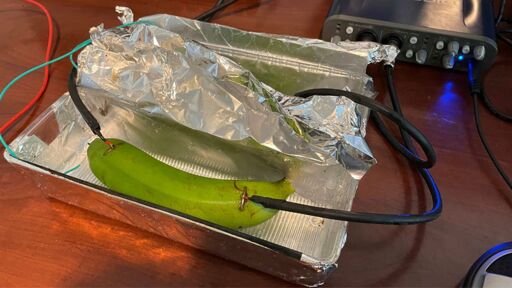
I used to be an audiophile. I spent a lot of money on speakers, and amplifiers, and DACs. But I always found the audiophile cable crowd a bit nuts. And the people that are buying audiophile versions of stuff in the digital domain are full on delusional.
I say “used to be” for two reasons. One, hearing everything does not always mean better. A lot of the time it just reveals imperfections in the recording. And depending on the space, and ambient noise, more headroom can be worse because it just pushes the quiet stuff below the background. And, you are going to have to listen to music in places that you do not have your gear and it is going to sound bad if you get too used to the good stuff. So your music life may be worse overall.
But the biggest difference is that I am older. I just cannot tell the difference as well as I used to.
But most people spend too much money on the equipment and not enough on the sources. You do not need a $20,000 setup if you are listening to badly encoded MP3 or AAC files for example.
But if you have high quality FLAC or Opus sources (or really high-end analog), you do not have to be an audiophile to tell the difference. Same with linear power supplies. You can hear the difference even if you do not spend so much money.
Like wine, audiophiles often make it more about the money they spend than the quality they are getting or the experience they are having.
That said, I can still hear well enough to know that 80% of the people that play music around me turn it up past what their amp can handle and it clips like crazy. I do not know how people listen to that.
Most people DO NOT hear the difference between FLAC and MP3s, which are 320kbs encoded. Most people that claim that do, can’t do it in the blind test.
Anecdotal, but… I’ve been a musician for 36 years and have fantastic hearing not just for my age but for any age. I know, I have to get it quantitatively tested twice a year!
I can’t tell the difference at all between FLAC and 320 kbps from the same source. I can tell a difference between FLAC and 128 kbps, but it’s not huge. It sounds a bit dull, but I have to be looking for the difference and comparing the two. If you just gave me one or the other with no reference, I might suspect the 128 if it was a simple recording of a single instrument or a song I’m intimately familiar with, and even then I wouldn’t be sure of it. It just sometimes “feels” weird.
So I converted over 4 terabytes of my music stash to 320 kbps and cut the total space into less than 2. Feels good.
deleted by creator
But if you have high quality FLAC or Opus sources (or really high-end analog), you do not have to be an audiophile to tell the difference
The analysis showed that there was no statistically significant difference in quality between the un- compressed signals and AAC-LC 320 kbps compression, which means participants did not perceive difference between two formats
https://downloads.bbc.co.uk/rd/pubs/whp/whp-pdf-files/WHP384.pdf
I’ve done a handful of those online “tests” where it’s a 320kbps mp3 and flac or wav clips.
I could almost always tell the difference. The prob was that I would think the mp3 was the higher quality one. In a friends group years ago, another friend of mine had similar results.
A lot of those “tests” also are strategically designed such that the bitrate of the 320mp3 isn’t saturated enough to run into bitrate aliasing. A lot of people, myself included, sometimes lean on flac because we have heard it make a difference, and it’s so shitty that we just go to the higher quality when we want archival quality versions.
Also, if you start introducing eq or other processing for various reasons, when you start magnifying sections of lossy, or even lossless audio, you can start hearing missing data or compression artifacts.
Could be they were both shit lol. I couldnt see (on mobile) what playback system was used.
Just ask an audiophile what they think about blind tests. If they argue against them you’ve found a snake oil salesman.
But what’s the point of having your newly-purchased $3000 wooden volume knob and polyatomic copper ring bus lift yet another veil from the soundstage if you’re blindfolded?
HEY! I got my $3000 wooden volume knob because it’s pretty and I can’t take a blind test if it’s worth it. I need my eyes to see it!
3k is obviously an exaggeration but goddamn why is woodwork so expensive?! I needed wooden set of some things that are normally made of plastic for about $100, the wood was $465 and literally only one guy on earth makes it. Fuck me!
You’ve identified why. If you are able get some tools doing stuff yourself is in general fun
I mean yeah if you’re literally the only guy in the entire world making it (I’m not joking, literally the only one. Some others make the same class of thing that would physically fit, but in the wrong style and lord knows why but it was a deliberate, and bad, decision) then you can charge whatever you want. Dude doesn’t even have it patented or anything, the designs are public (since like the 60s) and if I had any woodworking XP I could sell the exact same thing legally. 'Course, I’ve never worked wood in my damn life, so…
Still, $465 is a lot for these items.
What exactly is this thing, I’m curious now
Eh, I really didn’t want to be specific because it’s unfortunately both exceedingly nerdy and somewhat controversial (not that it should be imo but it is), but, you a Fallout: New Vegas fan by chance?
Let’s just say I can now patrol the Mojave and not worry so much about the cazadores, (but I’d still almost wish for nuclear winter, of course.)
well obviously, all this proves is that copper wires are just as bad as wet mud. Every audiophile knows you need gold oxygen nitrogen purified wires blessed by a voodoo witch doctor.
I love seeing this story… it reminds me of 30 years ago when I worked in the telephone industry. Heard about telephone copmanies rolling out service in very very rural areas - running signals over barbed-wire fences because it was too expensive to run dedicated cables. That did degrade the signal, but it worked.
I know it’s a completely different thing entirely, but it just gave me nostalgia remembering hearing about that.
To be fair, the signal is only going through these suboptimal conductors for a very short distance.
Try wiring up your stereo with 50 feet of bananas, and you might start having problems.
There’s always music in the banana chain… or something like that
To be fair, “audiophiles” are morons.
Depends. If you’re streaming Dire Staits on a $250,000 stereo. You’ve probably missallocated funds approaching a moronic level from a functionality perspective. However, if you’ve got half a billion in the bank, I’d say it’s a far more wholesome idiocy than for example, real estate. Money inherently means less to rich people. The difference of a few thousand to tens of thousands are, bewilderingly, fairly inconsequential to many people. I’d just assume they put that money into listening to music rather than super pacs or something. Hell, maybe they’ll actually hear what the musicians are saying and they’ll actually grow a little.
The issue with audio is the same issue with all hobbies. Spending a lot doesn’t make you an automatic expert, let alone even know what you’re doing. An expensive bat doesn’t make a bad player good, an expensive stove doesn’t make a bad cook good, expensive clothes doesn’t make an ugly person beautiful, an expensive running shoes don’t make an out of shape person healthier.
I find shitting on audiophiles particularly annoying because it’s smugness on both sides of the equation. The people who buy in think they’re better than everyone just like the people who see the con think they’re better than the rubes. If I had to pick a side though, I’d honestly pick the audiophiles, because at least they’re having fun.
There’s a big difference between a $100 sound system and a $1000 sound system. I’ve gotten the “audiophiles are dumb” lecture for suggesting someone upgrade from 2x4" computer speakers to actual studio monitors for working on their music. But their speakers literally could not reproduce some of the frequencies thru were trying to make, so they mixed the bass WAY the fuck too loud.
But yeah, diminishing returns start to kick in around that point. Quickly becomes the eternal story of a Fool and His Money.
What do you mean? I always pay extra for the audiophile version of vinyl records!
Can’t wait til 3d printers get good enough to make records so i can stock up on audiophile filament!
Don’t forget to also get the audiophile grade nozzle! Can’t have your expensive fancy filament squirted through some cheap hole-in-a-nut nozzle, what will give you a dull and wobbly sound.
Gonna turn an old vacuum tube into an extruder nozzle to keep that nice, warm analog sound.
Fun fact: this is where the “banana connector” came from. Before copper was discovered, early humans used bananas for all their audio connections. The name stuck, even though wires are made of metal today.
Additional trivia: The term “banana republic” originates from countries best known for exporting high-end audio equipment back in the day.
“banana split” stems from a failed experiment where scientists tried to split audio frequencies by sticking the connectors into ice cream and running the audio through it
TIL! It’s fucking bananas that I never knew this.
They are often also used as a unit of measurement of relative scale, especially amongst practitioners of internet science.
Banana physicist here.
This is actually due to a really interesting phenomenon called banana dilation. Although they may appear different sizes to the eye, bananas distort local spacetime such that they are all physically identical dimensions. This makes them a perfect and consistent measure of size.
Behold:
5.4 Electrical Conductivity Measurement This method includes electrical impedance spectroscopy (EIS) and dielectric analysis (DEA). The physical state of a material is measured as a function of frequency in EIS and the frequency ranges from 100 Hz - 10 MHz. It is simple and easier technique used to estimate the physiological status of various biological tissues49-52. Experimental frequency response of impedance is characterised by electrical equivalent circuits of materials. The physical properties of materials can be quantified by monitoring the changes in parameters at the equivalent circuit, among various equivalent models proposed53-54. DEA measurement is used in high frequency areas, generally 100 MHz - 10 GHz. DEA is used in moisture estimation and bulk density determination

So a overripe banana is an interesting high-pass filter, kinda like a capacitor, though the big takeaway is the conductance vs ripeness.
So if you want to test if a banana is ready to eat, hook it up… preferably with several other bananas in series. If the music is too loud, they are ready. Too quiet, and it’s not time yet.
The moment you give me a link to a banana tree/MP3 player/ripeness tester/EQ:

I only listen to music with overripe bananas. It sounds best that way. Copper wire just doesn’t sound as good. Believe me: My ears are very sensitive and superior to yours.
You get much better conductivity with plaintains because the cross-sectional area is bigger.
But because my ears are so discerning, I only put my audio jacks in jackfruit.
This is about a digital signal right? Cause I’m pretty sure if I add a banana midway into my bass’ pedalboard that I’d be getting a significantly different sound. I’m tempted to try and proof myself wrong tho lmao
The advantage of good wire is isolating the signal from interference. However, if you aren’t in an electrically noisy environment, anything that can conduct electricity will do just as well.
Something in my computer monitor isn’t shielded and will alert me to a incoming cell phone call a second or two before the phone rings.
Are you implying that gold isolates better from interference than copper?
He’s talking about the electromagnetic shielding in a cable, not the contact-points. Usually a copper mesh sheath housed underneath the outer-most rubbery layer and runs around and along the entire length of the signal-carrying wires inside the cable. Works like a Faraday cage, helps prevent electromagnetic interference from large power sources, other unshielded cables running parallel, or anything else that can generate an electromagnetic field near the cable.
Very important to protect signal integrity, widely used even outside the audiophile world (although there are of course plenty of audiophile gimmicks related to shielding).
Basically, if you have a bunch of live unshielded cables bundled and zip-tied together along with your speaker wire, you’ll definitely hear it. Run the signal through an oscilloscope, and you’ll even see it
Seems like you know what you’re talking about. If I may ask, how do ferrite beads figure into this? Do those actually help protect signal, or is it less effective?
Simply put, both protect against certain types of interference in different ways, and each is effective in ways that the other is not.
Mesh shielding is going to help prevent electrical interference from being introduced via the wire itself from an external source. Like other cables carrying signal and running very near/parallel, or electromagnetic fields generated from other devices, certain electrical components, household appliances, etc.
The ferrite beads protect against radio-frequency interference (RFI) via induction, acting like low-pass filters which attenuate specific bandwidths of very high frequency signals. Essentially, they intercept and absorb high-frequency electrical noise, and convert that energy into a small amount of heat instead of letting it pass through further down the signal path. This kind of interference can be from an external source, or generated internally from the various electronics/components in the signal path (which mesh shielding would do nothing to protect against). They also help dissipate any RFI that the mesh shielding itself may be carrying, so you often see both ferrite beads and mesh/foil shielding, like on laptop chargers or USB cables for example.
The article isn’t clear on one thing : was it an analog or digital signal ?
The results are entirely unsurprising if the signal was digital. Also, I’d like to see a similar test in an environment with more electrical interference, I think the unshielded materials would fare less well there.
This is a really old test. There are forum posts of the same concept and some news articles with the test that are so old that they 404 now. An unshielded coat hanger is the most common. And yes, this is done frequently with analog signals. No, you can’t tell the difference.
It’s a little confusing to me how it could be physically possible that there’d be no difference.
I’m not saying I think I could tell which is which, but surely they can’t sound the same ? Or if they do, why do we even use copper, instead of just making cables out of the cheapest random conductive substance available ? Is copper just that substance ?
I’m lightly active in the headphone enthusiast space. Even in the more light-hearted circles there is still an elevated amount of placebo bullshit and stubborn belief in things that verifiably make zero difference.
It’s rather fascinating in a way. I’ve been in and out of various hobbies over the course of my life but there is just something about audio that attracts an atmosphere of wilful ignorance and bad actors that prey on it.
I have a set of Sony studio monitor headphones. I can hear more nuance and parts of the music I simply can’t hear in any of my ear buds or noise canceling headphones. They aren’t wireless, so I don’t really use them that often though.
It doesn’t matter the cable, the amp, shitty 128kbps mp3 or vinyl. I can hear much, much better with the drivers in them.
I’d say 90% of anything that matters is the driver. But past a certain midrange point, there just isn’t really much or any improvement.
A lot of it comes down to a mix of snobbishness, sunk cost fallacy, and tribalism.
You can’t admit that your $5,000 pair of headphones sound exactly the same as a $300 pair, because:
-
You’d no longer be able to pretend that you’re better than the people who have $300 headphones.
-
You’d have to admit to yourself that you completely wasted $4,700.
-
You’d have to realize that the tight-knit community you’ve formed with other $10k headphone people isn’t really bettor or even really distinct from communities of people with $300 headphones.
-
I fucking love audio and have an extensive collection of equipment. The last thing in the chain before your ears (so headphones and speakers) will absolutely make a difference and the thing that provides power to that can make a difference. But the cables? The fucking cables?! Absolutely no impact once you’re above like $10. Turns out, electrons are electrons and they behave like electrons. Shockingly that doesn’t change in copper, gold plated copper, pure silver, or mud. Doubly so for the non analog part of the chain. Hell I’ve even seen “audiophile grade” ethernet cables.
The other part of the equation is if the differences made by the things that do make a difference actually matter to the listener. They do to me, but my dad is more than happy to just use the speakers on his Dell monitors.
I’ve been in the audio enthusiast community for like 17 years now. When I was fresh, the internet commentators had me thinking there was some audio heaven in the high end compared to the mid range priced gear. Now I know better and the gear community is not so high end price evangelicals like it used to be. I feel like there was a before and after the $30 Monoprice DJ headphones and the wave of headphones since. Then especially IEMs. Once ChiFi really got rolling with IEMs and amplifiers and DACs, $1000+ snake oil salespeople got to deal in a way more competitive market
Same with speakers. Internet changed everything. No more at the whim of specialty audio stores stock and Best Buys. Now you got the whole worlds amount of speaker brands at a click of a finger plus craigslist/offerup. Also again ChiFi amplifiers and DACs. Also improvements in audio codecs whether for wireless or not. Bluetooth audio was awful until it stopped being awful as standards improved
These days I mostly see the placebo audio arguments in streaming service and FLAC/lossless encode fanboys. Headphone and speaker communities these days seem a lot more self aware and steeped in self-deprecating humor over the cost, diminishing returns, placebo, snake oil they live in today compared to 17 years ago. I want my digital audio cables endpoints plated with the highest quality diamonds to preserve the zeros and ones. No lab diamonds. Must be natural providing the warmth only blood diamonds that excel in removing negative ions. I treat my room with the finest pink himalayan salt sound absorbent wall panels to deal with the most problematic materials used by homebuilders. Authentic himalayan salt has been shown to be some of the highest quality material in filtering unwanted noise and echos while leaving clean pure audio bliss
These days I mostly see the placebo audio arguments in streaming service and FLAC/lossless encode fanboys.
The clamour for lossless/high-res streaming is the audiophile community in a nutshell. Literally paying more money so your brain can trick you into thinking it sounds better.
Like many hobbies, it’s mainly a way to rationalize spending ever increasing amounts on new equipment and source content. I was into the whole scene for a while, but once I had discovered what components in the audio chain actually improve sound quality and which don’t, I called it quits.
The push for lossless seems more like pushback on low bit rate and reduced dynamic range by avoiding compression altogether. Not really a snob thing as much as trying to avoid a common issue.
The video version is getting the Blu-ray which is significantly better than streaming in specific scenes. For example every scene that I have seen with confetti on any streaming service is an eldritch horror of artifacts, but fine on physical media, because the streaming compression just can’t handle that kind of fast changing detail.
It does depend on the music or video though, the vast majority are fine with compression.
My roommate always corrects me when I make this same point, so I’ll pass it along. Blu-Rays are compressed using H.264/H.265, just less than streaming services.
🤓☝️ many older blu-rays also used VC1
People don’t like hearing this, but streaming services tune their codecs to properly calibrated TVs. Very few people have properly calibrated TVs. In particular, people really like to up the brightness and contrast.
A lot of scenes that look like mud are that way because you really aren’t supposed to be able distinguish between those levels of blackness.
That said, streaming services should have seen the 1000 comments like the ones here and adjusted already. You don’t need bluray level of bits to make things look better in those dark scenes, you need to tune your encoder to allow it to throw more bits into the void.
Lmao, I promise streaming services and CDNs employ world-class experts in encoding, both in tuning and development. They have already poured through maximized quality vs cost. Tuning your encoder to allow for more bits in some scenes by definition ups the average bitrate of the file, unless you’re also taking bits away from other scenes. Streaming services have already found a balance of video quality vs storage/bandwith costs that they are willing to accept, which tends to be around 15mbps for 4k. That will unarguably provide a drastically worse experience on a high-enough quality tv than a 40mbps+ bluray. Like, day and night in most scenes and even more in others.
Calibrating your tv, while a great idea, can only do so much vs low-bitrate encodings and the fake HDR services build in solely to trigger the HDR popup on your tv and trick it into upping the brightness rather than to actuality improve the color accuracy/vibrancy.
They don’t really care about the quality, they care that subscribers will keep their subscriptions. They go as low quality as possible to cut costs while retaining subs.
Blu-rays don’t have this same issue because there are no storage or bandwith costs to the provider, and people buying blu-rays are typically more informed, have higher quality equipment, and care more about image quality than your typical streaming subscriber.
Higher bitrate though init
Significantly, streaming is 8-16Mbps for 4K, whereas 4K discs are >100
The thing is, dynamic range compression and audio file compression are two entirely separate things. People often conflate the two by thinking that going from wav or flac to a lossy file format like mp3 or m4a means the track becomes more compressed dynamically, but that’s not the case at all. Essentially, an mp3 and a flac version of the same track will have the same dynamic range.
And yes, while audible artifacts can be a thing with very low bitrate lossy compression, once you get to128kbps with a modern lossy codec it becomes pretty much impossible to hear in a blind test. Hell, even 96kbps opus is pretty much audibly perfect for the vast majority of listeners.
In a distant past I liked to compare hires tracks with the normal ones. It turned out that they often used a different master with more dynamic range for the hires release, tricking the listener into thinking it sounded different because of the high bitrate and sampling frequency. The second step was to convert the high resolution track to standard 16 bit 44.1 kHz and do a/b testing to prove my point to friends.
I’m a person with sensitive hearing and mp3 always sounds muddy to me compared with a flac or wav rip. My coworker poo-pooed this notion, but I proved it to him. Mp3 does alter the sounds, most people won’t notice, but for somebody that does hear the differences its annoying. I would not spend 10k or anything. I paid $15 for an old 5.1 system, and max $80 for a pi2 with a DAC hat. LOL
For me its like if you stood outside a persons house and heard them talking vs their words coming over their TV. There is a noticable signature that let’s you hear its the TV or real people, and that’s what mp3 vs wav is like for me.
I can also hear my neighbours ceiling fan running in the connected town home. That almost inaudible drone of the motor running, drives me nuts
I think it depends on your source.
If we are talking about a downloaded good high bit rate MP3 and a FLAC, then yeah, I can’t hear a difference.
For streaming, I CAN hear a difference between the default spotify stream and my locally stored lossless files. That difference might come down to how they are mastered or whatever spotify does to the files, but whatever it is the difference is pretty perceptible to me and I don’t have especially sensitive ears.
If we’re talking free tier Spotify, then it could actually be due to the bitrate (96kbps OGG vorbis, IIRC). However, if you’re a premium subscriber then the standard bitrate is 160kbps, which is definitely not audible to 99.99% of people.
In fact, after much ABX testing, I found that a noticeable audible difference between a local file and the same song on a streaming service is almost always due to either a loudness differential or because the two tracks come from different masters.
I really noticed when I switched from Spotify to Tidal that there is something different about Spotify’s sound quality that makes it worse even at the highest streaming quality. I was surprised since I fully admit that in 99% of cases I can’t tell the difference between a 128kbps MP3 and a FLAC of the same file.
Could be poor mastering. You can’t always just take a track and squish it down to a low bitrate without tweaking some settings.
Usually when I hear someone swear by lossless audio one service provides compared to another, I swear the reality is either placebo or one service is just using a better masterering of an album compared to another. The service that has on their service the better version album mix and mastering. Like they could serve it as 192kbps MP3 and sound better than a lossless encoded album version with the non ideal mix and mastered release
Oh, 100%. I actually tested this by recording bit perfect copies from different streaming services and comparing them using Audacity.
I found that they only way to hear a difference between the same song played on two different platforms was 1) if there was a notable difference in gain or 2) if they were using two different masters for the same song. If two platforms were using the same master version, they were impossible to tell apart in an ABX test.
All of this is to say that the quality of the mastering is orders of magnitude more important than whether or not a track is lossy or lossless, as far as audible audio quality goes.
Not here to argue I can hear the difference, because I can’t. But in audio collecting where the size and burden of even large lossless files isn’t much different from lossy files, why care? I download the flac files and compress upon delivery to the client where the space might be of a larger concern.
There’s a difference though, it’s just that gold plated cables doesn’t change anything.
I’d love testing a Sennheiser hd600 series, to see if I hear some difference, from my 598 headset. But they are so expensive so I’m all okay with my refurbished 40€ ones :-)
A DAC for the PC is a nice step up though IMO (there are crap ones too ofc). Not everything is audiofoolery.
I couldn’t agree more. I got interest in higher-end audio equipment when I was younger, so I went to a local audio shop to test out some Grado headphones. They had a display of different headphones all hooked up to the “same” audio source.
60x vs 80x sounded identical. 60x to 125x, the latter had a bit more bass. 125x to 325x, the latter had a lot more bass and the clarity was a bit better. Then I plugged the 60x into the same connection they had the 325x in. Suddenly the 60x sounded damn similar. Not quite as good, but the 60x was 1/3 the cost and the 325x sure as hell didn’t sound 3x better. They just had the EQ set better for it.
Picked up a bose system test cassette once. It sounds amazing at first listen on anything because they overhype the high and low end, much like most bad modern music. And its actually fatiguing over time and stresses people out. Big reason I hate a lot of (popular) modern music is the over hyped non natural eq.
Friends will show me songs and they grind on my ears with that unnautural 3k boost to make everything “radio sounding”, gross. I don’t want modern radio polish (and the sampled kick drums, awful) I want good sound.
Commodores, night shift, 1985, one of the best sounding albums of all time because they knew what they were doing. And funnily enough one of the first digital tape recordings on a Mitsubishi! Also the nightfly.
Yeah and the loudness wars. It never ended eh.
Yeah sadly. Studies have shown modern music causes fatigue and I think some people at least realize that now. Radio rock is always going to be a sausage waveform. Gotta go underground for good stuff usually.
I like lossless compression. But not because I’d be a audio nut. I prefer it from a data retention and archival viewpoint. I could cut and join lossless data as often as i like, without losses accumulating.
Do you often cut and join audio that you did not record yourself?
something about audio that attracts an atmosphere of wilful ignorance
I think it’s the lack of a shared vocabulary.
Everyone likes some music better than other music, and so everyone think they can tell the difference between good and bad music. However, nobody can explain the difference in plain words.
This easily leads to the conclusion that it is fully subjective, and this is where the ignorance comes from. If nobody can explain what good music is, then my own voodoo explanation is as good as any.
However, we can talk about music theory, audio production and sound analysis in scientific terms to the point where we can even reproduce certain sounds based on the description. But we can’t really understand the description without actually experiencing the sound.
It’s similar to somebody saying “I don’t like this cake” or someone saying “my taste receptors react to the umami in this cake”, but I still wouldn’t have a clue about how the cake tastes.
Sound is also different from other sciences in that there is very little proof of one thing being more correct than others. And that goal changes constantly. Whenever somebody does crack the code to what people enjoy, it’ll get boring really quick.
I had a music teacher long ago who said that there is no bad music, only wrong audiences. His point was that the music that makes it through to the recording and publishing will already have passed the filter where someone made a decision if there is an audience for it. If you hear bad music, then you’re just not the right audience.
Anyway, cables. Who cares. The end result is the most important part. However, I’d prefer to hook up the instruments on stage with thick cables instead of bananas. Same thing applies at home. Any wire will do, but cheap wires do break.
Most people can’t tell the difference between a 320kbps mp3 and lossless, but hey if folks really want to waste their money on snake oil like gold-plated cables then I say let ‘em.
At that quality of MP3 you’d really need either a track that specifically pushes the limits of the codec on technicalities, or a one in a million hearing + high precision monitors.
Albeit FLAC is generally a better option still because it compresses things losslessly, reducing raw file size 50-70% (comparable to MP3 at 128kbps bitrate) and is a royalty-free, meaning it can be freely implemented as a hardware codec.
For example, a bunch of microcontrollers in the ESP32 family have built in FLAC codecs that outperform their MP3 counterparts, meaning a FLAC library can be directly streamed to them, and with the right DAC combo, one can build inexpensive, low power adapters to hook their existing AV systems up to Sonos-style streaming. And with many AV systems supporting bidirectional RS232 (or other serial) communications for controlling the system and querying it’s state, you can literally smartify them completely AND provide high quality audio streams to them.
I think FLAC is considered lossless so the comparison should be with WAV; whereas for lossy you have MP3/Vorbis.
MP3 patents expired a while ago i think, but for the longest time i’ve used Vorbis because of that.
128kbps files are roughly 90% compression from raw, so not comparable. I’ll admit that I haven’t bothered with FLAC much, but in my limited experience it generally is pretty rare to see much above 50-55% compression from raw.
Thing is, storage isn’t at a premium anymore, so there’s no reason not to use lossless even if you can’t hear the difference.
Thing is, storage isn’t at a premium anymore,
U sure about that?
Old mp3 players used to measure space in megabytes, so yes, I’m sure of that.
I did a blind test, and found it depends on the genre.
Slow, chill music is completely transparent when compressed, no matter how hard I “audio peep.” It’s not even a question.
But something “dense” like System of a Down has audible distortion. It loosely (not always) coincided with the bitrate of the flac files, which kind of makes sense, though even the extreme end is hard to notice unless you know the particular song very well.
Also… a lot of recordings kind of suck. It’s crazy to worry about tiny bits of distortion when a bit perfect master is already noisy and distorted.
Audio codecs like MP3 usually do a Fourier transform to move the sound into the frequency domain, discard any frequencies that you’re unlikely to notice, and encode ‘rate of change’ for the remaining ones. So the encoding problem is usually sound with fast changes in intensity or frequency, which is basically what percussion is.
System is quite percussion heavy, so will sound bad.
Recently moved from Spotify to Qobuz, because fuck Dan Ek, and the fact that they’ve got better bitrates across the board really makes the difference for jazz and jazzy stuff. Neglected, sounds crap on Spotify. Sounds great on Qobuz. But that’s the change from ‘bad’ to ‘quite good’ bitrates; additional bits are very much a case of diminishing returns.
The only reason for reasonable quality speaker cables, is so that you get consistant volume between left and right channels if the volume is the same. That and so they don’t break when you pull on them.
Nah it’s literally only the latter.
Cheap and expensive will give the same volume. But cheap will snap if you look at them wrong, whereas expensive you could throw off the tallest building in the world and they’d have nothing happen to them when you fetch em.
It matters in digital signals more than I expected.
A bad-quqlity HDMI cable over a long run will start getting a bunch of noise on some of my displays that shows up as random green specs popping off due to signal loss, whereas better cables will give a clean signal.
And back when more broadcasts were analog and I ran tech for a road show, I’d occasionally pick up random stations on poorly-shielded cables that would get amplified by powered speakers. The cables essentially became antennas. Though I haven’t run into that in over 20 years.
Poorly-shielded cables and speakers also used to have a lot of issues with cell phones. Anyone else remember the series of 3-beeps you could sometimes hear on speakers a few seconds before a phone in the room started ringing?
HDMI either works or it doesn’t. It’s not an analogue signal.
Edit: Well, nevermind lol.
I thought audio quality was more to do with the source and the destination. If you have a shit needle on a record or a speaker made of wood then its gonna sound like ass.
I never once thought it had anything to do with the cables. Unless they were frayed or damaged in some way.
But i am not an audiophile, i record my own music and mix etc, but never worried about cable quality before.
Speakers are made of wood, the good ones are at least.
Unless your referring to the actual drivers, then yeah wood wouldn’t really work in that case.
Even more than the actual contact with the media, the entire system breaks down at the ears. If your ears aren’t well-trained, then you don’t even know what to listen for. You might think loud bass is good, or booming drums, and never notice that you can’t hear any mids.
So in a blind test like this, some people just might prefer a sound that this experiment has little impact on, so they wouldn’t be able to notice any differences.
A well-trained ear might be able to detect differences between them, but still not have a real preference. Besides being able to hear all the different frequencies, you have to know what the instruments sound like in real life to know if those frequencies are reproducing accurately. Again, if you don’t what it’s supposed to sound like, you really don’t know if ANY change in components makes a positive or negative difference in the natural sound, you only know the difference relative to your personal preference.
TL;DR: This “experiment” doesn’t prove anything. It’s just funny.
Interesting, do you know where I can buy a set of trained ears? - Audiophiles, probably.
Some of it is genetic, but a lot of it is years of training in hearing and teasing out all the frequencies.
I spent years in the audiophile record business back in the transition days from analogue LPs to digital CDs, and spent a LOT of time with beyond top-of-the-line audio gear, including high end stuff that wasn’t even on the consumer market.
My ears got trained from many years in bands and orchestras, then recording sessions, then hearing the final recordings on CD, as well as thousands of other recordings, and many live performances by some of the greatest orchestras in the world. I know what it is supposed to sound like at every stage of the process.
Bottom line, cables aren’t going to be a major issue. Guarantee you’ve got at least 10 other variables making a bigger difference, and most of them can’t even be fixed.
Exactly this, the cables never mattered. They’re the least significant part of an audiophile system and I doubt anyone could tell the difference between a crappy cable and a good quality cable. People get good quality cable for durability rather than sound quality.
I think the term audiophile has changed in the last decade or two, because now i keep seeing being used to mean “someone who likes music more than the average person”. Before it was more “had an entire room dedicated to music listening and if you move their chair a millimetre they will literally murder you”
That’s the kind of person who swears that can tell s huge difference based on cable (but, of course, never in a blind test).
There are websites dedicated to selling them things they don’t need. A 1m audio cable can cost several tens of thousands of pounds/dollars. And they’ll buy them and swear that they make a significant difference to the timbre of the hi hats on track 3 of The Joshua Tree
Think I’m exaggerating? Here’s a cable, for home use. 8ft. Yours for the low, low price of £98,770
That’s not a pair, btw…