The advantage of good wire is isolating the signal from interference. However, if you aren’t in an electrically noisy environment, anything that can conduct electricity will do just as well.
He’s talking about the electromagnetic shielding in a cable, not the contact-points. Usually a copper mesh sheath housed underneath the outer-most rubbery layer and runs around and along the entire length of the signal-carrying wires inside the cable. Works like a Faraday cage, helps prevent electromagnetic interference from large power sources, other unshielded cables running parallel, or anything else that can generate an electromagnetic field near the cable.
Very important to protect signal integrity, widely used even outside the audiophile world (although there are of course plenty of audiophile gimmicks related to shielding).
Basically, if you have a bunch of live unshielded cables bundled and zip-tied together along with your speaker wire, you’ll definitely hear it. Run the signal through an oscilloscope, and you’ll even see it
Seems like you know what you’re talking about. If I may ask, how do ferrite beads figure into this? Do those actually help protect signal, or is it less effective?
Simply put, both protect against certain types of interference in different ways, and each is effective in ways that the other is not.
Mesh shielding is going to help prevent electrical interference from being introduced via the wire itself from an external source. Like other cables carrying signal and running very near/parallel, or electromagnetic fields generated from other devices, certain electrical components, household appliances, etc.
The ferrite beads protect against radio-frequency interference (RFI) via induction, acting like low-pass filters which attenuate specific bandwidths of very high frequency signals. Essentially, they intercept and absorb high-frequency electrical noise, and convert that energy into a small amount of heat instead of letting it pass through further down the signal path. This kind of interference can be from an external source, or generated internally from the various electronics/components in the signal path (which mesh shielding would do nothing to protect against). They also help dissipate any RFI that the mesh shielding itself may be carrying, so you often see both ferrite beads and mesh/foil shielding, like on laptop chargers or USB cables for example.


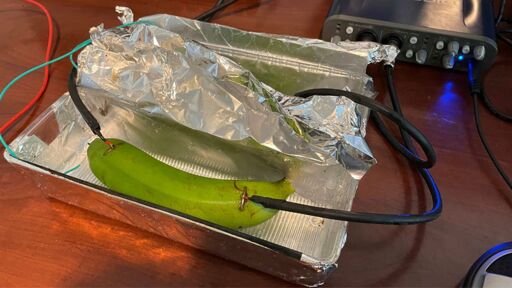
The advantage of good wire is isolating the signal from interference. However, if you aren’t in an electrically noisy environment, anything that can conduct electricity will do just as well.
Something in my computer monitor isn’t shielded and will alert me to a incoming cell phone call a second or two before the phone rings.
Are you implying that gold isolates better from interference than copper?
He’s talking about the electromagnetic shielding in a cable, not the contact-points. Usually a copper mesh sheath housed underneath the outer-most rubbery layer and runs around and along the entire length of the signal-carrying wires inside the cable. Works like a Faraday cage, helps prevent electromagnetic interference from large power sources, other unshielded cables running parallel, or anything else that can generate an electromagnetic field near the cable.
Very important to protect signal integrity, widely used even outside the audiophile world (although there are of course plenty of audiophile gimmicks related to shielding).
Basically, if you have a bunch of live unshielded cables bundled and zip-tied together along with your speaker wire, you’ll definitely hear it. Run the signal through an oscilloscope, and you’ll even see it
Seems like you know what you’re talking about. If I may ask, how do ferrite beads figure into this? Do those actually help protect signal, or is it less effective?
Simply put, both protect against certain types of interference in different ways, and each is effective in ways that the other is not.
Mesh shielding is going to help prevent electrical interference from being introduced via the wire itself from an external source. Like other cables carrying signal and running very near/parallel, or electromagnetic fields generated from other devices, certain electrical components, household appliances, etc.
The ferrite beads protect against radio-frequency interference (RFI) via induction, acting like low-pass filters which attenuate specific bandwidths of very high frequency signals. Essentially, they intercept and absorb high-frequency electrical noise, and convert that energy into a small amount of heat instead of letting it pass through further down the signal path. This kind of interference can be from an external source, or generated internally from the various electronics/components in the signal path (which mesh shielding would do nothing to protect against). They also help dissipate any RFI that the mesh shielding itself may be carrying, so you often see both ferrite beads and mesh/foil shielding, like on laptop chargers or USB cables for example.