I’ve been in the audio enthusiast community for like 17 years now. When I was fresh, the internet commentators had me thinking there was some audio heaven in the high end compared to the mid range priced gear. Now I know better and the gear community is not so high end price evangelicals like it used to be. I feel like there was a before and after the $30 Monoprice DJ headphones and the wave of headphones since. Then especially IEMs. Once ChiFi really got rolling with IEMs and amplifiers and DACs, $1000+ snake oil salespeople got to deal in a way more competitive market
Same with speakers. Internet changed everything. No more at the whim of specialty audio stores stock and Best Buys. Now you got the whole worlds amount of speaker brands at a click of a finger plus craigslist/offerup. Also again ChiFi amplifiers and DACs. Also improvements in audio codecs whether for wireless or not. Bluetooth audio was awful until it stopped being awful as standards improved
These days I mostly see the placebo audio arguments in streaming service and FLAC/lossless encode fanboys. Headphone and speaker communities these days seem a lot more self aware and steeped in self-deprecating humor over the cost, diminishing returns, placebo, snake oil they live in today compared to 17 years ago. I want my digital audio cables endpoints plated with the highest quality diamonds to preserve the zeros and ones. No lab diamonds. Must be natural providing the warmth only blood diamonds that excel in removing negative ions. I treat my room with the finest pink himalayan salt sound absorbent wall panels to deal with the most problematic materials used by homebuilders. Authentic himalayan salt has been shown to be some of the highest quality material in filtering unwanted noise and echos while leaving clean pure audio bliss
These days I mostly see the placebo audio arguments in streaming service and FLAC/lossless encode fanboys.
The clamour for lossless/high-res streaming is the audiophile community in a nutshell. Literally paying more money so your brain can trick you into thinking it sounds better.
Like many hobbies, it’s mainly a way to rationalize spending ever increasing amounts on new equipment and source content. I was into the whole scene for a while, but once I had discovered what components in the audio chain actually improve sound quality and which don’t, I called it quits.
The push for lossless seems more like pushback on low bit rate and reduced dynamic range by avoiding compression altogether. Not really a snob thing as much as trying to avoid a common issue.
The video version is getting the Blu-ray which is significantly better than streaming in specific scenes. For example every scene that I have seen with confetti on any streaming service is an eldritch horror of artifacts, but fine on physical media, because the streaming compression just can’t handle that kind of fast changing detail.
It does depend on the music or video though, the vast majority are fine with compression.
My roommate always corrects me when I make this same point, so I’ll pass it along. Blu-Rays are compressed using H.264/H.265, just less than streaming services.
People don’t like hearing this, but streaming services tune their codecs to properly calibrated TVs. Very few people have properly calibrated TVs. In particular, people really like to up the brightness and contrast.
A lot of scenes that look like mud are that way because you really aren’t supposed to be able distinguish between those levels of blackness.
That said, streaming services should have seen the 1000 comments like the ones here and adjusted already. You don’t need bluray level of bits to make things look better in those dark scenes, you need to tune your encoder to allow it to throw more bits into the void.
Lmao, I promise streaming services and CDNs employ world-class experts in encoding, both in tuning and development. They have already poured through maximized quality vs cost. Tuning your encoder to allow for more bits in some scenes by definition ups the average bitrate of the file, unless you’re also taking bits away from other scenes. Streaming services have already found a balance of video quality vs storage/bandwith costs that they are willing to accept, which tends to be around 15mbps for 4k. That will unarguably provide a drastically worse experience on a high-enough quality tv than a 40mbps+ bluray. Like, day and night in most scenes and even more in others.
Calibrating your tv, while a great idea, can only do so much vs low-bitrate encodings and the fake HDR services build in solely to trigger the HDR popup on your tv and trick it into upping the brightness rather than to actuality improve the color accuracy/vibrancy.
They don’t really care about the quality, they care that subscribers will keep their subscriptions. They go as low quality as possible to cut costs while retaining subs.
Blu-rays don’t have this same issue because there are no storage or bandwith costs to the provider, and people buying blu-rays are typically more informed, have higher quality equipment, and care more about image quality than your typical streaming subscriber.
The thing is, dynamic range compression and audio file compression are two entirely separate things. People often conflate the two by thinking that going from wav or flac to a lossy file format like mp3 or m4a means the track becomes more compressed dynamically, but that’s not the case at all. Essentially, an mp3 and a flac version of the same track will have the same dynamic range.
And yes, while audible artifacts can be a thing with very low bitrate lossy compression, once you get to128kbps with a modern lossy codec it becomes pretty much impossible to hear in a blind test. Hell, even 96kbps opus is pretty much audibly perfect for the vast majority of listeners.
In a distant past I liked to compare hires tracks with the normal ones. It turned out that they often used a different master with more dynamic range for the hires release, tricking the listener into thinking it sounded different because of the high bitrate and sampling frequency. The second step was to convert the high resolution track to standard 16 bit 44.1 kHz and do a/b testing to prove my point to friends.
I’m a person with sensitive hearing and mp3 always sounds muddy to me compared with a flac or wav rip. My coworker poo-pooed this notion, but I proved it to him. Mp3 does alter the sounds, most people won’t notice, but for somebody that does hear the differences its annoying. I would not spend 10k or anything. I paid $15 for an old 5.1 system, and max $80 for a pi2 with a DAC hat. LOL
For me its like if you stood outside a persons house and heard them talking vs their words coming over their TV. There is a noticable signature that let’s you hear its the TV or real people, and that’s what mp3 vs wav is like for me.
I can also hear my neighbours ceiling fan running in the connected town home. That almost inaudible drone of the motor running, drives me nuts
Usually when I hear someone swear by lossless audio one service provides compared to another, I swear the reality is either placebo or one service is just using a better masterering of an album compared to another. The service that has on their service the better version album mix and mastering. Like they could serve it as 192kbps MP3 and sound better than a lossless encoded album version with the non ideal mix and mastered release
Oh, 100%. I actually tested this by recording bit perfect copies from different streaming services and comparing them using Audacity.
I found that they only way to hear a difference between the same song played on two different platforms was 1) if there was a notable difference in gain or 2) if they were using two different masters for the same song. If two platforms were using the same master version, they were impossible to tell apart in an ABX test.
All of this is to say that the quality of the mastering is orders of magnitude more important than whether or not a track is lossy or lossless, as far as audible audio quality goes.
If we are talking about a downloaded good high bit rate MP3 and a FLAC, then yeah, I can’t hear a difference.
For streaming, I CAN hear a difference between the default spotify stream and my locally stored lossless files. That difference might come down to how they are mastered or whatever spotify does to the files, but whatever it is the difference is pretty perceptible to me and I don’t have especially sensitive ears.
If we’re talking free tier Spotify, then it could actually be due to the bitrate (96kbps OGG vorbis, IIRC). However, if you’re a premium subscriber then the standard bitrate is 160kbps, which is definitely not audible to 99.99% of people.
In fact, after much ABX testing, I found that a noticeable audible difference between a local file and the same song on a streaming service is almost always due to either a loudness differential or because the two tracks come from different masters.
I really noticed when I switched from Spotify to Tidal that there is something different about Spotify’s sound quality that makes it worse even at the highest streaming quality. I was surprised since I fully admit that in 99% of cases I can’t tell the difference between a 128kbps MP3 and a FLAC of the same file.
There’s a difference though, it’s just that gold plated cables doesn’t change anything.
I’d love testing a Sennheiser hd600 series, to see if I hear some difference, from my 598 headset. But they are so expensive so I’m all okay with my refurbished 40€ ones :-)
A DAC for the PC is a nice step up though IMO (there are crap ones too ofc). Not everything is audiofoolery.
I couldn’t agree more. I got interest in higher-end audio equipment when I was younger, so I went to a local audio shop to test out some Grado headphones. They had a display of different headphones all hooked up to the “same” audio source.
60x vs 80x sounded identical. 60x to 125x, the latter had a bit more bass. 125x to 325x, the latter had a lot more bass and the clarity was a bit better. Then I plugged the 60x into the same connection they had the 325x in. Suddenly the 60x sounded damn similar. Not quite as good, but the 60x was 1/3 the cost and the 325x sure as hell didn’t sound 3x better. They just had the EQ set better for it.
Picked up a bose system test cassette once. It sounds amazing at first listen on anything because they overhype the high and low end, much like most bad modern music. And its actually fatiguing over time and stresses people out. Big reason I hate a lot of (popular) modern music is the over hyped non natural eq.
Friends will show me songs and they grind on my ears with that unnautural 3k boost to make everything “radio sounding”, gross. I don’t want modern radio polish (and the sampled kick drums, awful) I want good sound.
Commodores, night shift, 1985, one of the best sounding albums of all time because they knew what they were doing. And funnily enough one of the first digital tape recordings on a Mitsubishi! Also the nightfly.
Yeah sadly. Studies have shown modern music causes fatigue and I think some people at least realize that now. Radio rock is always going to be a sausage waveform. Gotta go underground for good stuff usually.
I like lossless compression. But not because I’d be a audio nut. I prefer it from a data retention and archival viewpoint. I could cut and join lossless data as often as i like, without losses accumulating.


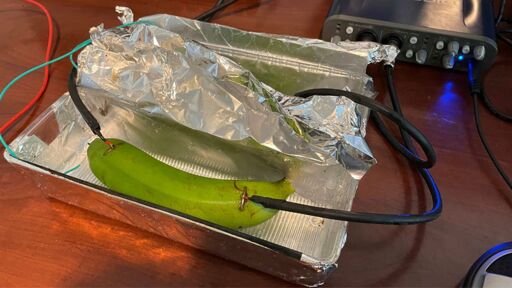
I’ve been in the audio enthusiast community for like 17 years now. When I was fresh, the internet commentators had me thinking there was some audio heaven in the high end compared to the mid range priced gear. Now I know better and the gear community is not so high end price evangelicals like it used to be. I feel like there was a before and after the $30 Monoprice DJ headphones and the wave of headphones since. Then especially IEMs. Once ChiFi really got rolling with IEMs and amplifiers and DACs, $1000+ snake oil salespeople got to deal in a way more competitive market
Same with speakers. Internet changed everything. No more at the whim of specialty audio stores stock and Best Buys. Now you got the whole worlds amount of speaker brands at a click of a finger plus craigslist/offerup. Also again ChiFi amplifiers and DACs. Also improvements in audio codecs whether for wireless or not. Bluetooth audio was awful until it stopped being awful as standards improved
These days I mostly see the placebo audio arguments in streaming service and FLAC/lossless encode fanboys. Headphone and speaker communities these days seem a lot more self aware and steeped in self-deprecating humor over the cost, diminishing returns, placebo, snake oil they live in today compared to 17 years ago. I want my digital audio cables endpoints plated with the highest quality diamonds to preserve the zeros and ones. No lab diamonds. Must be natural providing the warmth only blood diamonds that excel in removing negative ions. I treat my room with the finest pink himalayan salt sound absorbent wall panels to deal with the most problematic materials used by homebuilders. Authentic himalayan salt has been shown to be some of the highest quality material in filtering unwanted noise and echos while leaving clean pure audio bliss
The clamour for lossless/high-res streaming is the audiophile community in a nutshell. Literally paying more money so your brain can trick you into thinking it sounds better.
Like many hobbies, it’s mainly a way to rationalize spending ever increasing amounts on new equipment and source content. I was into the whole scene for a while, but once I had discovered what components in the audio chain actually improve sound quality and which don’t, I called it quits.
The push for lossless seems more like pushback on low bit rate and reduced dynamic range by avoiding compression altogether. Not really a snob thing as much as trying to avoid a common issue.
The video version is getting the Blu-ray which is significantly better than streaming in specific scenes. For example every scene that I have seen with confetti on any streaming service is an eldritch horror of artifacts, but fine on physical media, because the streaming compression just can’t handle that kind of fast changing detail.
It does depend on the music or video though, the vast majority are fine with compression.
My roommate always corrects me when I make this same point, so I’ll pass it along. Blu-Rays are compressed using H.264/H.265, just less than streaming services.
🤓☝️ many older blu-rays also used VC1
Higher bitrate though init
Significantly, streaming is 8-16Mbps for 4K, whereas 4K discs are >100
People don’t like hearing this, but streaming services tune their codecs to properly calibrated TVs. Very few people have properly calibrated TVs. In particular, people really like to up the brightness and contrast.
A lot of scenes that look like mud are that way because you really aren’t supposed to be able distinguish between those levels of blackness.
That said, streaming services should have seen the 1000 comments like the ones here and adjusted already. You don’t need bluray level of bits to make things look better in those dark scenes, you need to tune your encoder to allow it to throw more bits into the void.
Lmao, I promise streaming services and CDNs employ world-class experts in encoding, both in tuning and development. They have already poured through maximized quality vs cost. Tuning your encoder to allow for more bits in some scenes by definition ups the average bitrate of the file, unless you’re also taking bits away from other scenes. Streaming services have already found a balance of video quality vs storage/bandwith costs that they are willing to accept, which tends to be around 15mbps for 4k. That will unarguably provide a drastically worse experience on a high-enough quality tv than a 40mbps+ bluray. Like, day and night in most scenes and even more in others.
Calibrating your tv, while a great idea, can only do so much vs low-bitrate encodings and the fake HDR services build in solely to trigger the HDR popup on your tv and trick it into upping the brightness rather than to actuality improve the color accuracy/vibrancy.
They don’t really care about the quality, they care that subscribers will keep their subscriptions. They go as low quality as possible to cut costs while retaining subs.
Blu-rays don’t have this same issue because there are no storage or bandwith costs to the provider, and people buying blu-rays are typically more informed, have higher quality equipment, and care more about image quality than your typical streaming subscriber.
The thing is, dynamic range compression and audio file compression are two entirely separate things. People often conflate the two by thinking that going from wav or flac to a lossy file format like mp3 or m4a means the track becomes more compressed dynamically, but that’s not the case at all. Essentially, an mp3 and a flac version of the same track will have the same dynamic range.
And yes, while audible artifacts can be a thing with very low bitrate lossy compression, once you get to128kbps with a modern lossy codec it becomes pretty much impossible to hear in a blind test. Hell, even 96kbps opus is pretty much audibly perfect for the vast majority of listeners.
In a distant past I liked to compare hires tracks with the normal ones. It turned out that they often used a different master with more dynamic range for the hires release, tricking the listener into thinking it sounded different because of the high bitrate and sampling frequency. The second step was to convert the high resolution track to standard 16 bit 44.1 kHz and do a/b testing to prove my point to friends.
I’m a person with sensitive hearing and mp3 always sounds muddy to me compared with a flac or wav rip. My coworker poo-pooed this notion, but I proved it to him. Mp3 does alter the sounds, most people won’t notice, but for somebody that does hear the differences its annoying. I would not spend 10k or anything. I paid $15 for an old 5.1 system, and max $80 for a pi2 with a DAC hat. LOL
For me its like if you stood outside a persons house and heard them talking vs their words coming over their TV. There is a noticable signature that let’s you hear its the TV or real people, and that’s what mp3 vs wav is like for me.
I can also hear my neighbours ceiling fan running in the connected town home. That almost inaudible drone of the motor running, drives me nuts
Usually when I hear someone swear by lossless audio one service provides compared to another, I swear the reality is either placebo or one service is just using a better masterering of an album compared to another. The service that has on their service the better version album mix and mastering. Like they could serve it as 192kbps MP3 and sound better than a lossless encoded album version with the non ideal mix and mastered release
Oh, 100%. I actually tested this by recording bit perfect copies from different streaming services and comparing them using Audacity.
I found that they only way to hear a difference between the same song played on two different platforms was 1) if there was a notable difference in gain or 2) if they were using two different masters for the same song. If two platforms were using the same master version, they were impossible to tell apart in an ABX test.
All of this is to say that the quality of the mastering is orders of magnitude more important than whether or not a track is lossy or lossless, as far as audible audio quality goes.
I think it depends on your source.
If we are talking about a downloaded good high bit rate MP3 and a FLAC, then yeah, I can’t hear a difference.
For streaming, I CAN hear a difference between the default spotify stream and my locally stored lossless files. That difference might come down to how they are mastered or whatever spotify does to the files, but whatever it is the difference is pretty perceptible to me and I don’t have especially sensitive ears.
If we’re talking free tier Spotify, then it could actually be due to the bitrate (96kbps OGG vorbis, IIRC). However, if you’re a premium subscriber then the standard bitrate is 160kbps, which is definitely not audible to 99.99% of people.
In fact, after much ABX testing, I found that a noticeable audible difference between a local file and the same song on a streaming service is almost always due to either a loudness differential or because the two tracks come from different masters.
I really noticed when I switched from Spotify to Tidal that there is something different about Spotify’s sound quality that makes it worse even at the highest streaming quality. I was surprised since I fully admit that in 99% of cases I can’t tell the difference between a 128kbps MP3 and a FLAC of the same file.
Could be poor mastering. You can’t always just take a track and squish it down to a low bitrate without tweaking some settings.
There’s a difference though, it’s just that gold plated cables doesn’t change anything.
I’d love testing a Sennheiser hd600 series, to see if I hear some difference, from my 598 headset. But they are so expensive so I’m all okay with my refurbished 40€ ones :-)
A DAC for the PC is a nice step up though IMO (there are crap ones too ofc). Not everything is audiofoolery.
I couldn’t agree more. I got interest in higher-end audio equipment when I was younger, so I went to a local audio shop to test out some Grado headphones. They had a display of different headphones all hooked up to the “same” audio source.
60x vs 80x sounded identical. 60x to 125x, the latter had a bit more bass. 125x to 325x, the latter had a lot more bass and the clarity was a bit better. Then I plugged the 60x into the same connection they had the 325x in. Suddenly the 60x sounded damn similar. Not quite as good, but the 60x was 1/3 the cost and the 325x sure as hell didn’t sound 3x better. They just had the EQ set better for it.
Picked up a bose system test cassette once. It sounds amazing at first listen on anything because they overhype the high and low end, much like most bad modern music. And its actually fatiguing over time and stresses people out. Big reason I hate a lot of (popular) modern music is the over hyped non natural eq.
Friends will show me songs and they grind on my ears with that unnautural 3k boost to make everything “radio sounding”, gross. I don’t want modern radio polish (and the sampled kick drums, awful) I want good sound.
Commodores, night shift, 1985, one of the best sounding albums of all time because they knew what they were doing. And funnily enough one of the first digital tape recordings on a Mitsubishi! Also the nightfly.
Yeah and the loudness wars. It never ended eh.
Yeah sadly. Studies have shown modern music causes fatigue and I think some people at least realize that now. Radio rock is always going to be a sausage waveform. Gotta go underground for good stuff usually.
I like lossless compression. But not because I’d be a audio nut. I prefer it from a data retention and archival viewpoint. I could cut and join lossless data as often as i like, without losses accumulating.
Do you often cut and join audio that you did not record yourself?