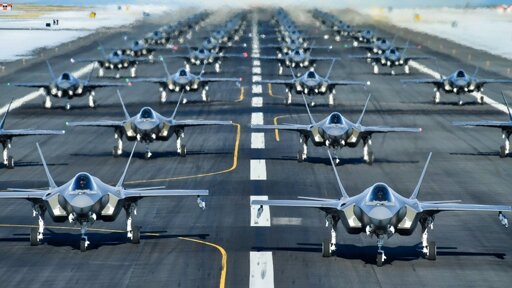
-
While 16 F-35 fighters remain contractually committed for delivery starting this year, the full 88-jet procurement is stalled amidst trade friction with the Trump administration.
-
Rising program costs—now estimated at $30 billion—have reopened the door for Saab’s JAS 39 Gripen E.
-
The Gripen offers superior industrial benefits, including 12,600 domestic jobs and Arctic-optimized maintenance.
-
Ottawa must now balance the F-35’s unmatched NORAD interoperability against the Gripen’s economic sovereignty as the aging CF-18 Hornet fleet reaches its structur
Cut your losses, and fuck america.
Canada needs to start building its own shit.
We had blackberry, we had Avro aero,we are capable of building things. We have good education. We should be building things and selling them. We dont uave a large population, but we are capable of that.
On one side no one wants the American option.
On the other side they cost way more.
There’s a reason it’s not debated.
Buying F35, at this point, is a bribe to appease impetulent Trump
Yeah besides jets are basically obsolete now. Drones and missiles are the current state of the art and they can be manufactured in Canada. Canada should be taking notes from Iran and Ukraine for dealing with a larger belligerent. The F16s Ukraine got were hit by drones. Anything above ground is not safe from enemy bombardment due to satellite etc.
Imagine being dumb enough to invest into the military industrial complex of a country that’s actively threatening to invade you.
Imagine being dumb enough to invest into the military industrial complex of a country that’s actively threatening to invade you.
And to buy defensive weapons that can be summarily and remotely shut down by that invading country.
That would be the most moronic decision possible.
The Gripen may not be a 1:1 match with the F-35, but neither was the Sherman a 1:1 match with the Nazi Tiger tank. It took an average of 8 Shermans being KO’d to take out a single Tiger. But when 10, 20, or even more Shermans could be fielded for every Tiger that hit the field, victory came down to numbers, not technological superiority. As has been copiously demonstrated across nearly every conflict of the 20th and 21st centuries.
And instead of 88 F-35 aircraft, that exact same dollar value could buy us 420 Gripen aircraft, at even less on-going maintenance costs on an overall basis.
True, even with 420 Gripens we don’t stand any chance of defending ourselves. But effective defense is not the goal… the goal is to make any invasion as prohibitively expensive for America as possible. And 420 Gripens that cannot be remotely shut down is that answer.
As we’re seeing in Iran, you don’t actually need jets to take on F-35s at all. You just need a lot of missiles and targeting systems that home on the giant heat signature.
This! Swarms of FPV drones is what Russia and Ukraine use. Even at 10% target hit because of defense systems, you can inflict considerable damages.
Yeah, it looks like the whole 20th century military doctrine is obsolete now. Investing in expensive toys like jets makes little sense especially if the goal is self defense.
Removed by mod
And the appeasement will only last a few weeks max, before he gets distracted by something else
My name’s not Max, but thanks for the info.
EDIT: Aw, they edited the capitalization, making my dumb joke… more dumb.
its not, were not buying those fucking planes
I will never understand what the hell went through Trudeau’s mind when he thought going through with the F-35 deal was a good move.
He literally told Canadians that the Liberals would never go ahead with buying F-35s, and then trapped us into this predicament by going back on his word when it was clear as day how hilariously unreliable the aircraft were.
The F-35 isn’t hilariously unreliable, that’s Russian propaganda that they laundered through known lying fuckwad Pierre Sprey.
As for why we went with it… Because the CAF wanted it. Putting aside all other considerations, it is the better aircraft. And at the time the notion of the US completely stabbing us in the back didn’t seem like a realistic possibility.
We absolutely should switch to buying the Gripen now, what Saab are offering is amazing and there are very good reasons to get away from the US. But let’s not start pretending that all of that was true when we signed the deal. At the time, the arguments against the F-35 were mostly fabricated bullshit that Russia fed us because they didn’t want all of NATO to be armed with a weapon system they have no effective way to counter.
I’d also argue that if all of NATO has the same aerial weapons platform, that leaves us vulnerable in a way that diversity doesn’t. If the F-35 has a vulnerability that the Saab doesn’t, then we’re still okay. If the F-35 is ALL we have, then we’re screwed.
Standards are great. Let’s make sure we have commonality of ammunition and logistics. But some duplication of weapons platforms is a good idea.
That’s completely valid, but it doesn’t necessarily outweigh the benefits of just how much the F-35 outclasses all the other options available.
This is, more than anything, an issue of the rest of NATO abandoning weapon development and relying on the US to do it instead. You’re right that this homogeneity brings potential vulnerabilities, but that’s a problem that needs long term solutions.
Saab are developing a sixth gen fighter, and when that becomes available I can absolutely see the arguments for adopting it, but right now the arguments are a lot more complicated. While there are plenty of good arguments against the F-35, none of them really address the degree to which it overmatches every competing option. That’s a factor that simply cannot be ignored.
That’s fair, but I’m not fully convinced that the F-35 is so overmatching in a Canadian context. We have a lot of territory to cover, so we want planes that are able to handle rough runway conditions, rough weather, and have a long range. The F-35 is a bit of a princess, and I don’t think its airframe compromises are as valuable in a Canadian defense context as they might be in an offensive context supporting the latest American adventurism abroad.
Having the ability to select lower-cost options that are Good Enough In The Context might be worth the higher cost of maintaining two supply lines. Plus, not every mission is going to need the F-35. Having to shoehorn the F-35 into every possible mission seems wasteful, if we can have a plane that costs half as much for the lighter missions, or twice as many of the cheaper plane.
Having the ability to select lower-cost options that are Good Enough In The Context might be worth the higher cost of maintaining two supply lines. Plus, not every mission is going to need the F-35. Having to shoehorn the F-35 into every possible mission seems wasteful, if we can have a plane that costs half as much for the lighter missions, or twice as many of the cheaper plane.
Yeah, I’ve seen this idea floated that we may go for a split fleet of about 40 F-35s and 80 Gripens (which I assume is what you’re nodding at). To my mind this sounds like an excellent solution, both for the reasons you outlined above, and because it addresses both the Russian threat and our own need to be less dependent on the US, militarily and economically. It gives us a weapons platform that substantially overmatches anything in the Russian fleet, and a weapons platform that we can reliably fly and maintain in any hypothetical future conflict.
In regards to how the F-35 fares in a defensive context, there’s a pernicious myth that stealth only matters for first strike. If that’s what you’re alluding to, the simple reality is that all warfare is about stealth. That’s why our soldiers don’t only wear camouflage when they’re attacking. Seeing the enemy before they see you is the single biggest advantage you can possibly have in any form of warfare. That’s true of infantry, tanks, ships, airplanes… It doesn’t matter. Stealth wins fights, no matter the context, with very few exceptions.
I’d have figured that in a defensive engagement, land-based radars would provide a home-field advantage, so that stealth is not as useful as it would be on the offensive.
It’s true that you don’t want to be detected by an attacker either, but I believe that doesn’t matter as much, since in an aerial engagement, the first one detected is the first one dead anyway.
So stealth is good, but not, like, as good over Canadian territory, as long as we’re being supported by good detection.
They’re exceptionally reliable, and better than anything else at what they do. He went back on this word because he was actually put into rooms with airforce experts who made that clear, and he didn’t expect the US to turn evil at the time.
Cost Per Flying Hour F-35A: $36,000 - $48,000 USD Gripen E/F: $7,000 - $36,200 USD Difference: ~25-75% cheaper for Gripen (varies by source) Maintenance Hours Per Sortie F-35: 20-25 man-hours Gripen: 6-8 man-hours Difference: Gripen requires ~70% less maintenance labor Operational Availability (Readiness) F-35: 70-75% Gripen: High 90% range Difference: Gripen achieves roughly 2x readiness rate Total Lifecycle Cost (8,000-hour lifespan) F-35: ~$400 million (operations only) Gripen E: ~$180 million (operations only) Difference: F-35 costs ~2.2x more to operate
Nice. I’m guessing the F-16 would be closer to the F-35?
And then any other stealth aircraft is going to blow both out of the water.
I thought they said the F35s were terriblly expensive to maintain per hour of flying. Things can seem reliable in air if most of their time is on the ground getting replacement parts, and adjustments, but that quickly can lose a war by expenses.
They are very expensive per flight hour, yes, but that’s not the same thing as being unreliable. It’s a high end weapon with a high end price tag.
Yes, that’s my point, you can lose a war by expenses if your equipment needs a ton of preventative maintenance to stay reliable.
I mean, saying that any single factor is why you “lose a war” is completely ignoring how incredibly complex warfare is. No one loses a war because of one piece of equipment.
But if we were to take that framework as true, it would be just as fair to say that you can lose a war by having inferior equipment.
There are a lot of factors that go into military procurement decisions. That’s a part (albeit a small one) of why they take so damn long.
Yep but since Canada isn’t a super power like the USA it would seem prudent to go with the cheaper jet they were reviewing.
It would, if you’re not familiar with how the Canadian military operates.
We’re a small country. We’ve always had to punch above our weight in any military conflict we’re involved in. The most expensive, hard to replace, and hard to maintain element of any weapon system isn’t the weapon, it’s the human operator. So for our purposes, giving that human operator the best equipment possible has always been the better choice.
In air combat the better platform wins. Dogfighting is a thing of the past. You’re not beating highly superior aircraft with guts and barrel rolls. We know this, because we’ve tested it. We’ve studied it. There’s real hard science that goes into this stuff. If we have an aircraft that’s broadly on par with everything the Russians have, that’s a speed bump. They’ll bury our air force in numbers and not even notice. If we have an aircraft that’s vastly superior to everything the Russians have, that’s a real threat. They might still have the upper hand, for sure, but if our pilots are shooting theirs down at a ten, twenty or fifty to one rate (all realistic numbers for the kind of hypothetical match ups we’re talking about here) that suddenly becomes a very, very expensive war to contemplate getting yourself into.
Nope, you’re probably thinking of the F-22. The F-35 got it back down to reasonable hanger time and care, at the cost of a long, multi-trillion dollar development period.
Per the other commenter the Gripen is a bit cheaper yet, but that’s because it’s built like a car from the 70’s or something. All off-the-shelf parts combined in obvious ways with lots of allowances. The cost of that is it shows up to radar like a 70’s car. It’s basically just a very different aircraft for doing different things.
I understand the whole Norad interoperability, but I truly agree with your thought.
Justin was neither competent nor as straight laced as he seemed, quite a few times his admin was caught doing really shady shit, stealing gov money, mispending budgets, giving friends contracts for nothing. so im not going pretend this decision was made with any real thinking in mind.
Gripen!
A mixed fleet is probably optimal. The Grippens are far more pragmatic to form the bulk of our fighter capability. A stealth fighter has unique benefits so keeping the 16 already committed to isn’t unreasonable until 6th gen and beyond can be procured from actual allies.
The big mistake here is going all in on 88 F-35, when the future of aerospace defense is AI drone and missile/counter-missile defense. Not just because of American backstabbing. It’s costs far exceeds its strategic value and in true Canadian fashion our defense paradigms are always one to three steps behind.
Edit: Militaries win with effective + cheap + scale. Not ultra-expensive showpieces (heh) with critical flaws that do not scale.
Exactly, there may be times a topline fighter is needed, but most missions for air superiority aren’t going to be best plane vs. best plane.
We’ve seen in WWII, and we see in the asymmetric age of Ukraine and Iran wars, that a horde of thousand dollar problems wear down a million dollar problem solver.
The f-35s have kill switches in them. A fusible link that bricks them. Do not buy them.
I’m also not convinced their stealth capability is that great.
It wouldn’t surprise me if the US knew of flaws and that’s why they’re fine selling them.
I wanna say the Danish have already jail broken theirs, not saying we should get them and jail brake them just saying it is possible.
I fully expect Canada to go ahead with more F-35s. Not the full order, but more than just the current 16. We seem to be all-in on NORAD/Golden Dome participation and investment and the Arctic bases being invested in are being invested in with F-35 compatability in mind. Looks like a slow walk because the direction we’re headed will be politically unpopular.
100% Gripen
I’m not even sure that’s a good deal, honestly. They wouldn’t be any good on missions abroad, and would they actually last long if the US invaded? Hopefully the military is thinking it through carefully, and the politicians are listening.
Maybe we buy 30 billion in RBS SAMs from Sweden instead.
I don’t think our conventional military would last long if the US invaded regardless of the F35 or Gripen. The only hope in that situation is that the US sucks at occupying territory, and they would double suck in winter. That is if Daniel Smith, Scot Moe, Ford and their followers don’t just roll out the red carpet.
When thinking about our Airforce the more pertinent question is “What helps us the most of Russia invades?”
In case everyone forgot, that threat still exists. It didn’t go away because Trump started threatening our sovereignty.
Part of why the CAF wants the F-35 is because Russia has nothing even close in capabilities. That’s an important factor in any decision.
The neat thing about the Gripen is that it theoretically could run in a guerilla-type scenario. It takes an unskilled ground crew of IIRC five, and can take off and land on a dirt runway. If that’s enough, I have no idea.
The F-35 could be useful for hitting the US back in the very short term, but is very dependent on working airbase infrastructure and supply chains, which would be obliterated in about the time it takes their planes to reach us. Edit: And them not using a killswitch.
We’ve already spent a quarter billion on the RBS-70s, which adds up to around 75 MANPADs occupiers would have to worry about when landing and taking off, maybe more if there’s more missiles in the order than launchers.
Have the Iranians shot down a Gripen yet?
Have they ever had a Gripen within missile range?
Grippens flying over Canadian airspace are outside of Iran’s range, so we should be fine there.
Removed by mod
No, the Iranians haven’t discovered a kind of radio wave that the rest of us just missed. The “almost” in almost invisible means something, and there’s a variety of situations that can dramatically increase the radar signature, or that can make radar not the important consideration at all.
Iranians have used conventional optical tech. The promise of the F35 is to be detected late by conventional long range radar. They were never supposed to be invisible or quiet.
Granted that makes the stealth advantage very limited in terms of usage: coming from far away undetected. Then be very visible.
Besides yes, China claims they can detect them with their satellites network and a France military equipment maker is apparently developing a radar that detects stealth jets. So that advantage is apparently not going to last.
Granted that makes the stealth advantage very limited in terms of usage: coming from far away undetected. Then be very visible.
Given that modern air combat is all about beyond visual horizon attacks, I’m not sure how being hard to detect by non-visual means is limited in terms of usage.
Let’s step back a bit: stealth is about reducing the apparent size for radars. Being stealthy doesn’t mean you’re undetectable, but you will see a (non-stealth) enemy jet before it sees you. Then you fire a missile… and are instantly detected!
Air combat superiority will do only if you’re still beyond missile range at that point. Otherwise the other side also shoots back a long range missile at you, and it’s likely to end in mutual destruction. And even if it’s not, you revealed yourself, so better not be outnumbered. That reduces the usage in air combat.For air to ground, which is what happened here, same idea, except there are a lot of things you want to drop on a target that requires a certain proximity. The benefit of the F35 is it can theoretically take out air defence systems before being detected (again: providing the enemy radar does not have one of these next-gen fancy radars that can detect it). That’s what happened in Iran… except that the whole scenario assumes once again conventional air defence: SAM batteries are typically massive and well “visible”. They were destroyed before any jet would get close. But Iranians have APPARENTLY (I don’t think that was clarified) used a much smaller launcher that conventional SAM, maybe even on man’s shoulder, that was not destroyed, and worse: since it was optical/IR based, it didn’t emit any radar signal and the F35 didn’t see it coming (it didn’t launch flares nor done any evasive move).
So, once again, the F35 niche app was to take out SAMs and that was revealed insufficient.
Now, was it an excess of confidence and could the F35 have performed its mission without exposing itself so much? We don’t know. But the point is this is a flagrant demonstration of the limit of the “stealth” claims that often sound like a magic invisibility coat. I maintain: stealth does not have that many use cases!
Removed by mod
The 12600 jobs should be the only number the government should take into account.