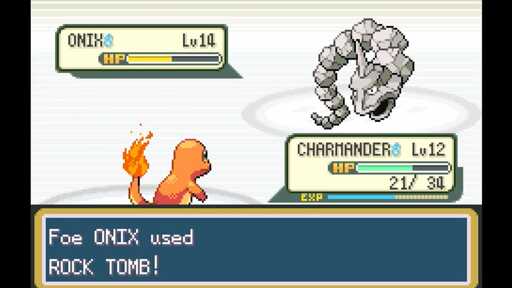
Nintendo has released a lengthy Q&A article discussing its decision to re-launch Pokémon FireRed and LeafGreen separately — rather than as part of the Nintendo Switch Online service.
If a company shows no respect for its consumers by nickel and diming them for everything, then there is no reason to show a company respect by purchasing its products.
If they re-released their entire back catalogue at reasonable prices—not locking them behind a subscription—with a commitment to letting users transfer them to future consoles without an upgrade fee, then things would be different.
If a company shows no respect for its consumers by nickel and diming them for everything, then there is no reason to show a company respect by purchasing its products.
Sure, but there is a difference between not giving them money, and not giving them money but getting their product anyway.
“I don’t like your product or practices, so I’m not going to purchase it” is not the same as “I like your product but not your practices, so I’m going to pirate it.”
Video games are not exactly a vital good like food.
Blind consumer loyalty only incentivizes Nintendo to further raise prices and make their products less consumer friendly.
Piracy simply demonstrates a problem with supply; if Nintendo wants to solve it, the solution isn’t trying to cuts heads off of a hydra, but rather adjust prices to capture unrealized market potential.
Unlike physical cartridges, a digital, emulated copy of FireRed has no resale or collector’s value. The lack of physical copies for virtual console games also means each copy sold costs Nintendo nothing beyond the initial emulator development cost, which would be minuscule on a per-game basis.
Considering those factors, and the Switch having a higher install base than prior systems (over ten times Wii U unit sales), maintaining the Wii U and 3DS price points is the most reasonable means for Nintendo to monetize their back catalogue in a way that makes piracy less enticing for many people: $3 per GB, $4 per GBC, $5 per NES, $7-8 per GBA, $8 per SNES, $10 per N64/DS, and $20 per Wii.
Given that each emulated console only requires that a Switch emulator be developed for it once (something Nintendo has already done for NSO) to support hundreds of paid titles, there’s no need to increase prices when the games will sell several times more than they had any chance to on the Wii U.
Given how many games NSO includes, they could continue offering them that way for people who prefer renting their library. Consumers want meaningful options; pricing a GBA game at $20 is not that.


If a company shows no respect for its consumers by nickel and diming them for everything, then there is no reason to show a company respect by purchasing its products.
If they re-released their entire back catalogue at reasonable prices—not locking them behind a subscription—with a commitment to letting users transfer them to future consoles without an upgrade fee, then things would be different.
Sure, but there is a difference between not giving them money, and not giving them money but getting their product anyway.
“I don’t like your product or practices, so I’m not going to purchase it” is not the same as “I like your product but not your practices, so I’m going to pirate it.”
Video games are not exactly a vital good like food.
Blind consumer loyalty only incentivizes Nintendo to further raise prices and make their products less consumer friendly.
Piracy simply demonstrates a problem with supply; if Nintendo wants to solve it, the solution isn’t trying to cuts heads off of a hydra, but rather adjust prices to capture unrealized market potential.
I did not say anything about blind consumer loyalty, so that comment feels strange in the context of this conversation.
deleted by creator
Unlike physical cartridges, a digital, emulated copy of FireRed has no resale or collector’s value. The lack of physical copies for virtual console games also means each copy sold costs Nintendo nothing beyond the initial emulator development cost, which would be minuscule on a per-game basis.
Considering those factors, and the Switch having a higher install base than prior systems (over ten times Wii U unit sales), maintaining the Wii U and 3DS price points is the most reasonable means for Nintendo to monetize their back catalogue in a way that makes piracy less enticing for many people: $3 per GB, $4 per GBC, $5 per NES, $7-8 per GBA, $8 per SNES, $10 per N64/DS, and $20 per Wii.
Given that each emulated console only requires that a Switch emulator be developed for it once (something Nintendo has already done for NSO) to support hundreds of paid titles, there’s no need to increase prices when the games will sell several times more than they had any chance to on the Wii U.
Given how many games NSO includes, they could continue offering them that way for people who prefer renting their library. Consumers want meaningful options; pricing a GBA game at $20 is not that.
deleted by creator